Description
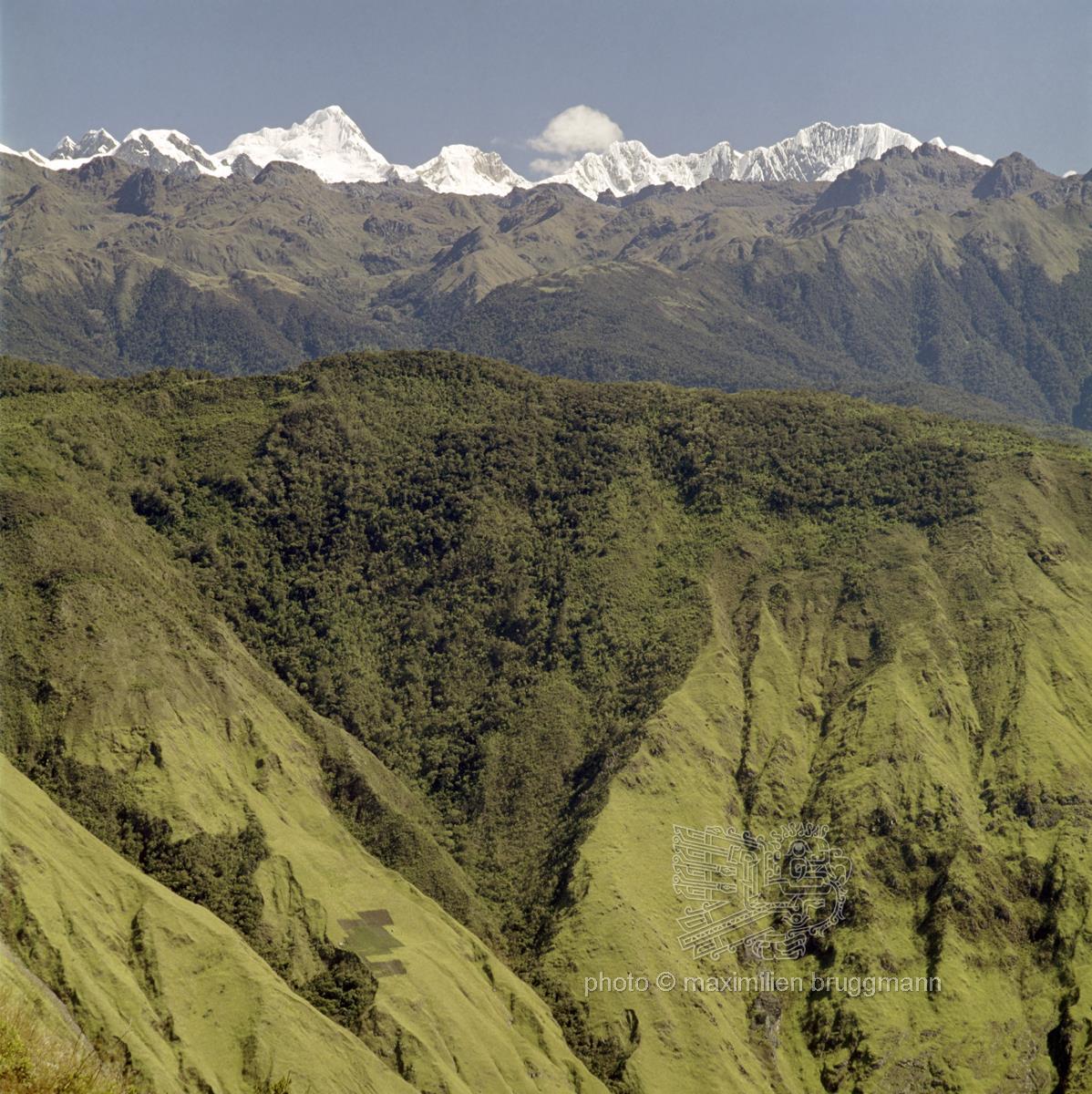
The imposing, snow-capped peak of Nevado Salcantay (6,271 m) lies directly to the south of the Inca citadel. It forms the geographical and spiritual centre of the region. For the Incas, Salcantay was one of the most important deities (apus), controlling the weather, the rain and the fertility of the region. Viewed from the central sundial rock (Intihuatana) in Machu Picchu, the Southern Cross stands directly above the summit of Salcantay at its highest point during the rainy season. On a clear day, the mountain’s white, ice-capped pyramid rises high in the south, towering far beyond the green ridges and ruins, lending the site a deeper sacred dimension. – Peru – 1976
Description
The imposing, snow-capped peak of Nevado Salcantay (6,271 m) lies directly to the south of the Inca citadel. It forms the geographical and spiritual centre of the region. For the Incas, Salcantay was one of the most important deities (apus), controlling the weather, the rain and the fertility of the region. Viewed from the central sundial rock (Intihuatana) in Machu Picchu, the Southern Cross stands directly above the summit of Salcantay at its highest point during the rainy season. On a clear day, the mountain’s white, ice-capped pyramid rises high in the south, towering far beyond the green ridges and ruins, lending the site a deeper sacred dimension. – Peru – 1976