Description
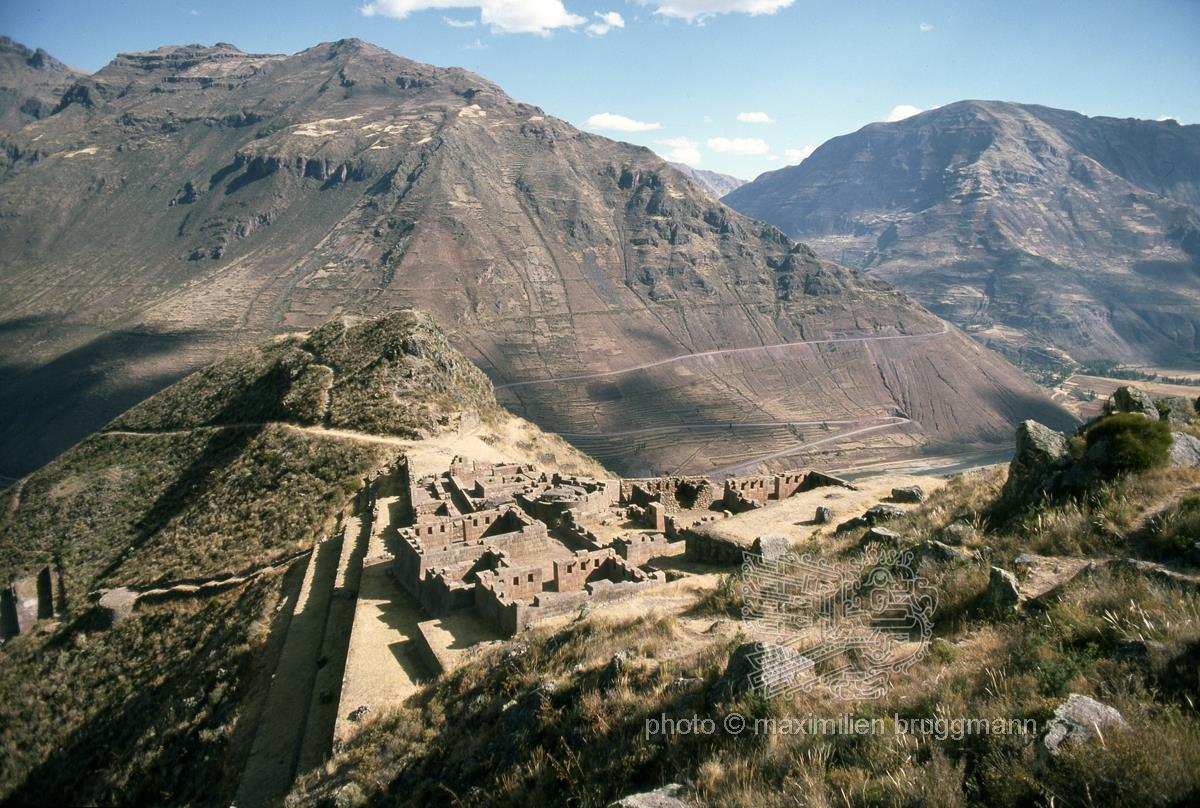
The impressive Inca ruins of Písac, situated in the Sacred Valley of the Incas in the Cusco region of Peru. The archaeological site lies on a mountain ridge high above the village of Písac and the River Urubamba. It is famous for its sophisticated architecture, the extensive agricultural terraces (andenes) and its strategic and religious significance during the Inca Empire. In the foreground is the Q’alla Q’asa sector, which, according to researchers, probably served as a residential quarter for guards, soldiers or priests. The buildings are precisely constructed from stone and nestle perfectly against the steep terrain. In the centre lies a sacred rock – the ‘place where the sun is tied’ – which served as an astronomical calendar for the Incas to determine the solstices. – 1976