logo
  • Home
  • His life ...
    • Biography
    • Curriculum Vitae
    • Book: “Maximilien au Désert” NEW !
  • His work ...
    • Books
    • Expos
    • Painting
    • Embossings
    • New Year's wishesNEW !
    • Online ExhibitionsNEW !
    • Slideshows
  • Media ...
    • Documentation
    • Videos
    • Contact
  • Photo Gallery ...
    • All Photos
    • -
    • Sahara Rock Art completed
    • Tuareg
    • Pueblos
    • Northwest Indians
    • Peru
    • The culture of the Incas
    • Pre-Inca cultures
    • The Northern Andes Expanded!
    • The Central Andes Expanded!
    • The Southern Andes Expanded!
    • Argentina
    • Gauchos
    • Central America
    • Sahara 1962-1975
    • Sahel
    • Sahara : Tassili - Tadrart 1993
    • From the Ténéré to the Aïr Mountains
    • In the dunes of Erg Izane
    • Across the Tamgak Mountains
    • From Adrar Bous into the Tamgak Mountains
    • With the Tuareg on the edge of the Tamgak Mountains
    • Building a Tataram: Documentation
    • The Spice Route – Spices NEW !
    • The Spice Route – Java and Sulawesi NEW !
    • The Spice Route – Moluccas NEW !
    • The Spice Route – Malaysia, Singapore and Sri Lanka NEW !
    • The Spice Route – India : Kerala, Goa and Mumbai NEW !
    • The Spice Route – India: Rajasthan NEW !
    • The Spice Route – Africa – Europe NEW !
  • Comments
    flag flag flag flag    

Description

  • Foto Number: AND-311

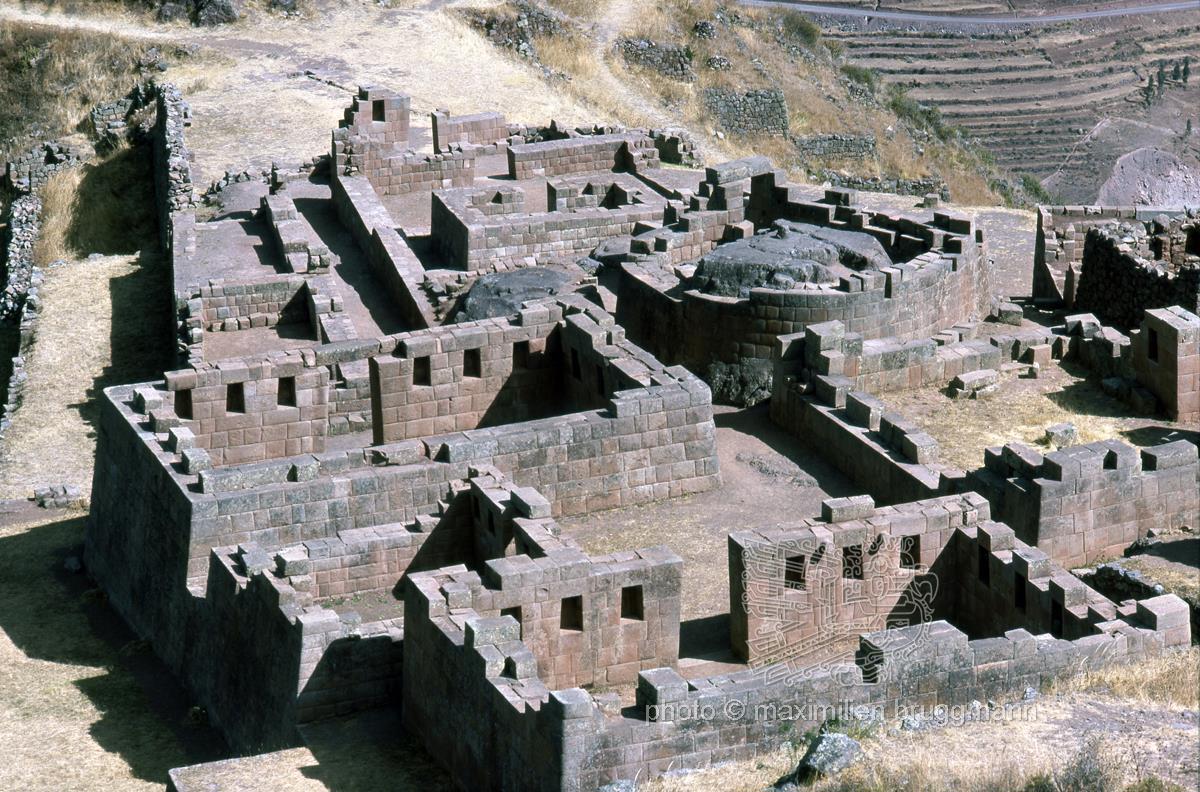
The central ceremonial area known as Intihuatana within the Parque Arqueológico de Písac in the Sacred Valley of the Incas in Peru. The most striking feature in this area is the semi-circular, D-shaped wall in the top right-hand corner of the picture. It encloses the sacred Intihuatana stone. In Quechua, the term means ‘place where the sun is tied’. It is a pillar hewn from natural rock which served the Incas as a precise solar compass, an astronomical observatory and a ritual altar for determining solstices and harvest cycles. The precise stonemasonry (masonry of finely hewn pink granite without mortar) clearly distinguishes this royal and religious precinct from the simpler residential or military structures in the rest of the fortress. – 1976
  • Keywords:
    South America Peru Cuzco Pisac Central Andes Incas Intihuatana Inca wall Inca-Culture Archaeology temple ruin

Description

  • Foto Number: AND-311

The central ceremonial area known as Intihuatana within the Parque Arqueológico de Písac in the Sacred Valley of the Incas in Peru. The most striking feature in this area is the semi-circular, D-shaped wall in the top right-hand corner of the picture. It encloses the sacred Intihuatana stone. In Quechua, the term means ‘place where the sun is tied’. It is a pillar hewn from natural rock which served the Incas as a precise solar compass, an astronomical observatory and a ritual altar for determining solstices and harvest cycles. The precise stonemasonry (masonry of finely hewn pink granite without mortar) clearly distinguishes this royal and religious precinct from the simpler residential or military structures in the rest of the fortress. – 1976

  • Keywords:
    South America Peru Cuzco Pisac Central Andes Incas Intihuatana Inca wall Inca-Culture Archaeology temple ruin

Website © 2026 pb + StratLabs
Copyright © Estate of Maximilien Bruggmann for all photos. Any use for commercial purposes prohibited.
flag flag flag flag