logo
  • Home
  • His life ...
    • Biography
    • Curriculum Vitae
    • Book: “Maximilien au Désert” NEW !
  • His work ...
    • Books
    • Expos
    • Painting
    • Embossings
    • New Year's wishesNEW !
    • Online ExhibitionsNEW !
    • Slideshows
  • Media ...
    • Documentation
    • Videos
    • Contact
  • Photo Gallery ...
    • All Photos
    • -
    • Sahara Rock Art completed
    • Tuareg
    • Pueblos
    • Northwest Indians
    • Peru
    • The culture of the Incas
    • Pre-Inca cultures
    • The Northern Andes Expanded!
    • The Central Andes Expanded!
    • The Southern Andes Expanded!
    • Argentina
    • Gauchos
    • Central America
    • Sahara 1962-1975
    • Sahel
    • Sahara : Tassili - Tadrart 1993
    • From the Ténéré to the Aïr Mountains
    • In the dunes of Erg Izane
    • Across the Tamgak Mountains
    • From Adrar Bous into the Tamgak Mountains
    • With the Tuareg on the edge of the Tamgak Mountains
    • Building a Tataram: Documentation
    • The Spice Route – Spices NEW !
    • The Spice Route – Java and Sulawesi NEW !
    • The Spice Route – Moluccas NEW !
    • The Spice Route – Malaysia, Singapore and Sri Lanka NEW !
    • The Spice Route – India : Kerala, Goa and Mumbai NEW !
    • The Spice Route – India: Rajasthan NEW !
    • The Spice Route – Africa – Europe NEW !
  • Comments
    flag flag flag flag    

Description

  • Foto Number: AND-438

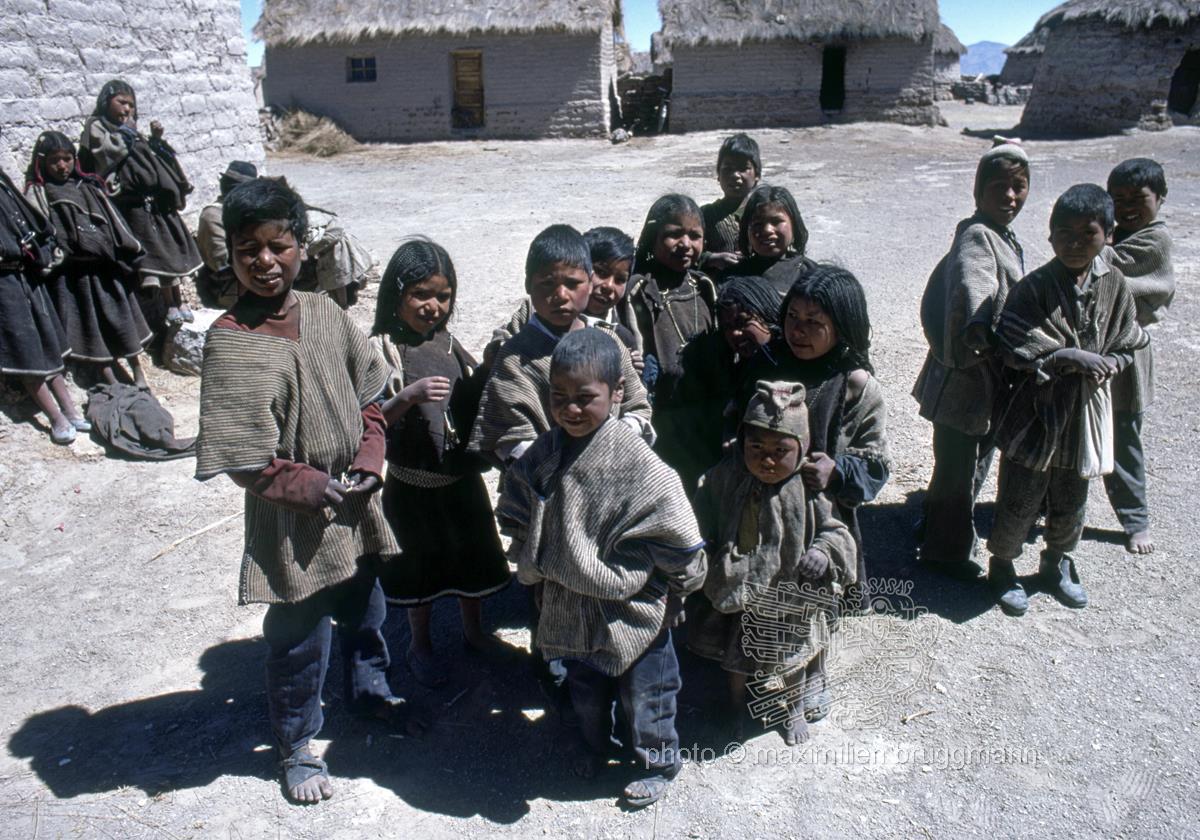
Children of the Chipaya culture in the barren Altiplano of Bolivia. The Chipaya are considered one of the oldest indigenous communities in the Andes. They live in a very salty and isolated region near the Lauca River and Lake Coipasa in the department of Oruro. The boys are wearing the typical, coarsely woven, sleeveless garment of the Chipaya people, known as an ‘ira’ or ‘tipoy’. The girls in the background usually wear the traditional, very fine braids (trenzados), which have a distinctly African appearance. The houses in the background are the famous round or rectangular huts (putucus), built from peat and grass sods (tepes) and thatched with straw. This construction method provides perfect protection against the region’s extremely icy winds. – Chipaya – Bolivia – 1976
  • Keywords:
    South America Bolivia Chipayas Andes Central Andes girl boy traditional clothing

Description

  • Foto Number: AND-438

Children of the Chipaya culture in the barren Altiplano of Bolivia. The Chipaya are considered one of the oldest indigenous communities in the Andes. They live in a very salty and isolated region near the Lauca River and Lake Coipasa in the department of Oruro. The boys are wearing the typical, coarsely woven, sleeveless garment of the Chipaya people, known as an ‘ira’ or ‘tipoy’. The girls in the background usually wear the traditional, very fine braids (trenzados), which have a distinctly African appearance. The houses in the background are the famous round or rectangular huts (putucus), built from peat and grass sods (tepes) and thatched with straw. This construction method provides perfect protection against the region’s extremely icy winds. – Chipaya – Bolivia – 1976

  • Keywords:
    South America Bolivia Chipayas Andes Central Andes girl boy traditional clothing

Website © 2026 pb + StratLabs
Copyright © Estate of Maximilien Bruggmann for all photos. Any use for commercial purposes prohibited.
flag flag flag flag