Description
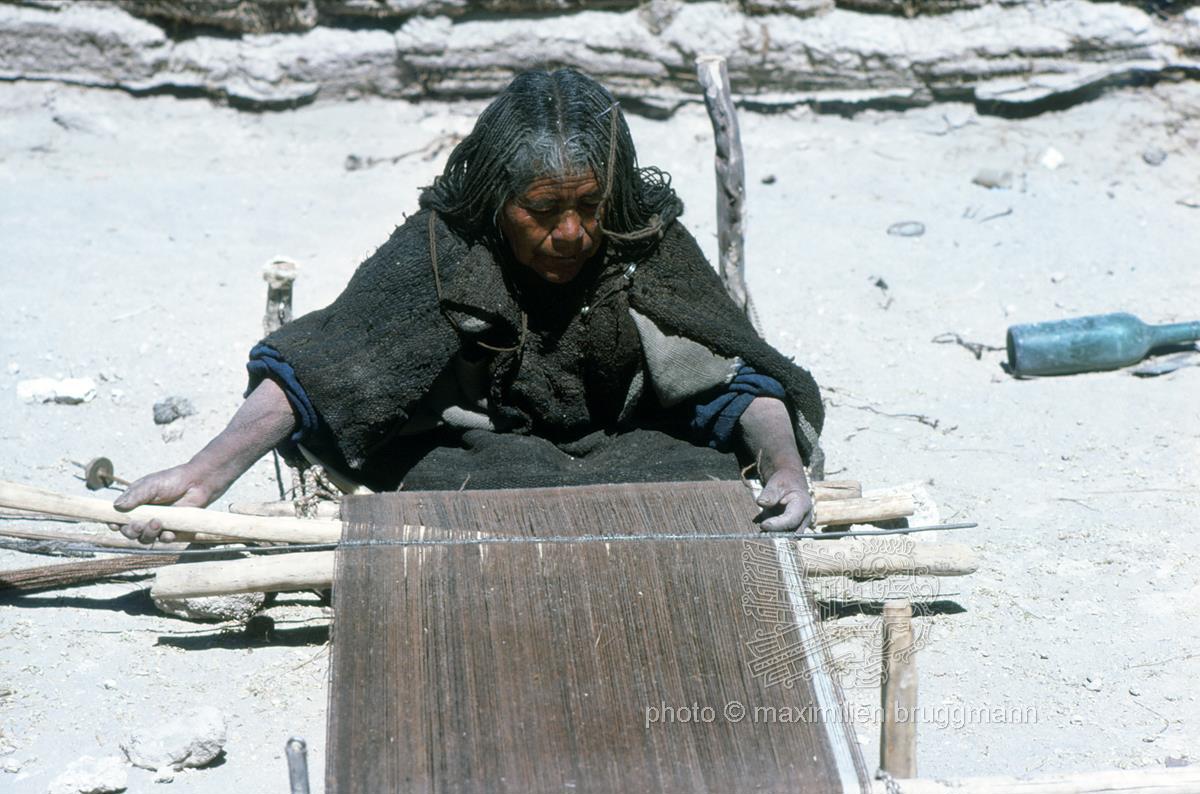
The Chipaya tribe in the Bolivian department of Oruro, which now numbers just under a thousand people, inhabits a particularly inhospitable region of the Andean high plateau on the Río Lauca, which flows into a salt lake. The Chipayas are the only highland indigenous people who obtain part of their food through hunting, as agriculture and livestock farming alone are unable to meet their needs due to the highly saline soil. At dawn, groups of hunters lie in wait on the lake shore for flamingos, ducks and Andean geese, which they catch using bolas – throwing balls attached to long straps. The word ‘Chipaya’ comes from the Aymara language and means ‘a mat of reed or straw woven with reed cords’. To protect themselves from the strong winds of the Altiplano, the Chipaya people have, since time immemorial, had to tie down the straw thatch on their roofs with cords. The belief that the Chipaya are the direct descendants of pre-Inca populations is supported by mummy finds in burial towers from that period, which, amongst other similarities, display the same hairstyles that the women spend hours and hours creating. The picture shows a typical pre-colonial loom. - Book: Picture 154 - Bolivia - 1976
Description
The Chipaya tribe in the Bolivian department of Oruro, which now numbers just under a thousand people, inhabits a particularly inhospitable region of the Andean high plateau on the Río Lauca, which flows into a salt lake. The Chipayas are the only highland indigenous people who obtain part of their food through hunting, as agriculture and livestock farming alone are unable to meet their needs due to the highly saline soil. At dawn, groups of hunters lie in wait on the lake shore for flamingos, ducks and Andean geese, which they catch using bolas – throwing balls attached to long straps. The word ‘Chipaya’ comes from the Aymara language and means ‘a mat of reed or straw woven with reed cords’. To protect themselves from the strong winds of the Altiplano, the Chipaya people have, since time immemorial, had to tie down the straw thatch on their roofs with cords. The belief that the Chipaya are the direct descendants of pre-Inca populations is supported by mummy finds in burial towers from that period, which, amongst other similarities, display the same hairstyles that the women spend hours and hours creating. The picture shows a typical pre-colonial loom. - Book: Picture 154 - Bolivia - 1976