Description
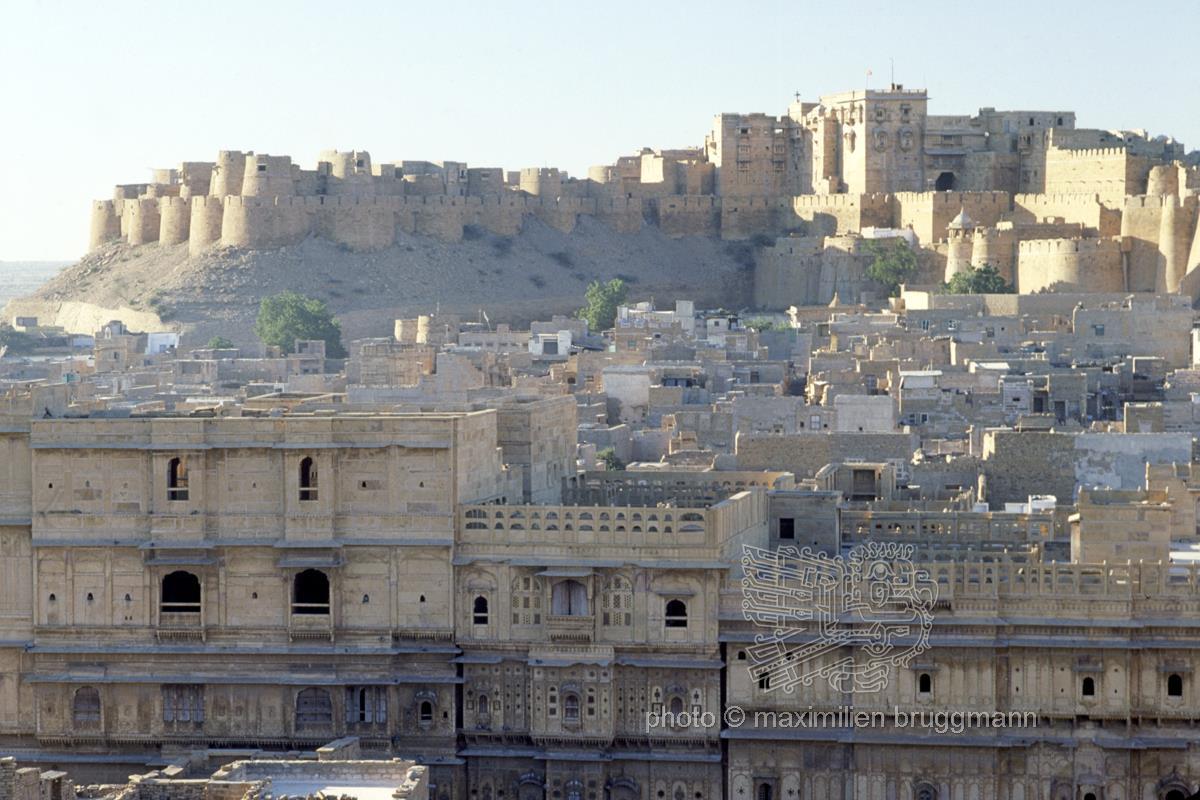
The historic fort of Jaisalmer (also known as Sonar Qila or the Golden Fort), situated in the heart of the Thar Desert in Rajasthan, India. It is considered one of the few remaining ‘living forts’ in the world. Around a quarter of the old town’s population still lives and works directly within the fort walls today.
It was founded in 1156 AD by the Rajput ruler Rawal Jaisal, from whom the city also took its name. The entire complex, as well as the surrounding historic merchant houses (havelis), were built from local yellow sandstone. When the sun shines, the fort glows in a honey-gold hue, earning it the nickname ‘Golden City’. The massive stone blocks were joined together at the time using precise dry-stone masonry techniques (interlocking blocks without cement or mortar).
Since 2013, Jaisalmer Fort has been a UNESCO World Heritage Site as part of the Hill Forts of Rajasthan. – 1990
Description
The historic fort of Jaisalmer (also known as Sonar Qila or the Golden Fort), situated in the heart of the Thar Desert in Rajasthan, India. It is considered one of the few remaining ‘living forts’ in the world. Around a quarter of the old town’s population still lives and works directly within the fort walls today.
It was founded in 1156 AD by the Rajput ruler Rawal Jaisal, from whom the city also took its name. The entire complex, as well as the surrounding historic merchant houses (havelis), were built from local yellow sandstone. When the sun shines, the fort glows in a honey-gold hue, earning it the nickname ‘Golden City’. The massive stone blocks were joined together at the time using precise dry-stone masonry techniques (interlocking blocks without cement or mortar).
Since 2013, Jaisalmer Fort has been a UNESCO World Heritage Site as part of the Hill Forts of Rajasthan. – 1990