Description
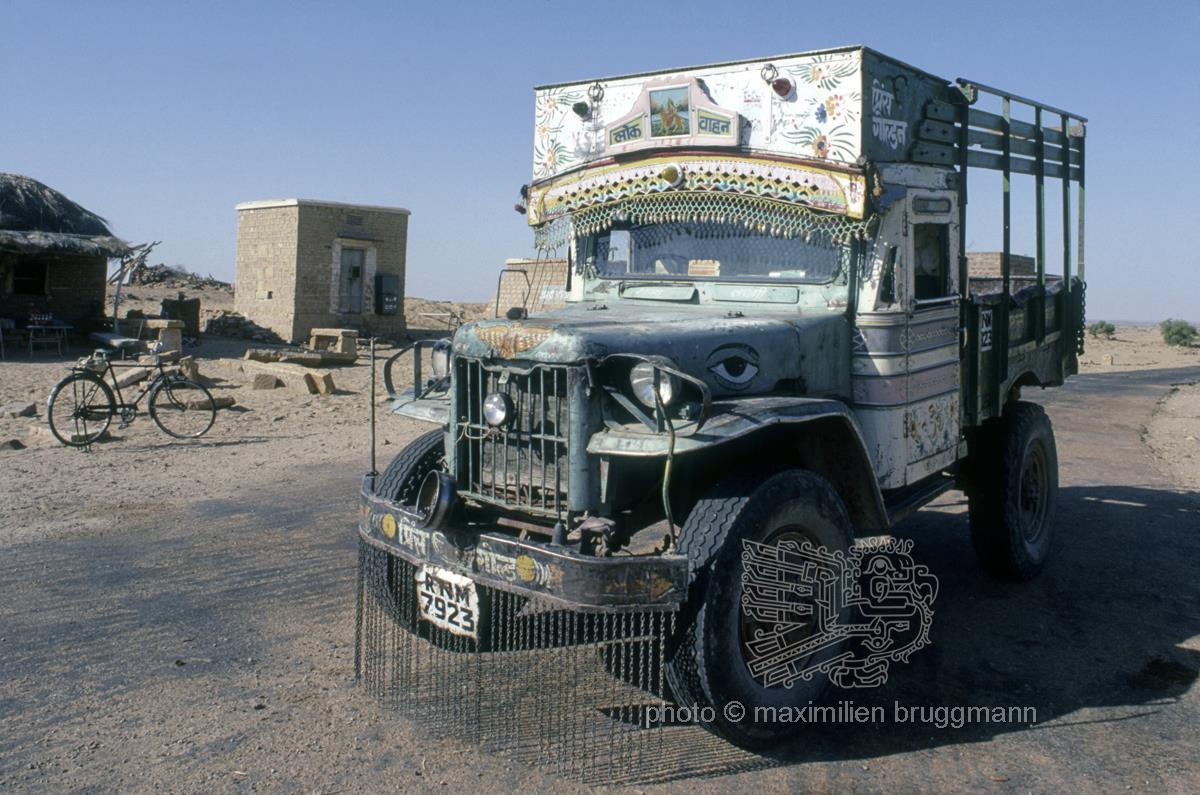
This historic, ornately decorated truck (often known as the “Nissan One Ton” or Nissan 4W73) was photographed in the desert region around Jaisalmer. These rugged four-wheel-drive vehicles were originally developed for military use and later adapted for civilian use. The body and the wooden superstructure above the cab are decorated with detailed floral patterns, ornaments, and inscriptions in Hindi and Sanskrit. A large eye is painted on the hood. This widespread symbol traditionally serves as protection against the “evil eye” (Nazar) and is said to protect the vehicle and its crew on long journeys. A curtain made of fine metal chains hangs in front of the front bumper. These fringes swing back and forth while driving, producing a rattling sound that is also believed to contribute to the ritual warding off of evil spirits. An image of a deity is affixed to the top of the front panel, a feature typical of Indian trucks, to invoke divine blessings for the journey. – 1990